Beyond Pinterest boards and backyard design magazines, designing a deck is only half of the equation. The decking material under your feet will play a key role in how much upkeep, longevity, and overall enjoyment you get from your upgrade.
Below, let’s break down the ins and outs of choosing between these two popular decking choices for hardscaping in Ottawa. Read on!
What is a Wood Deck?
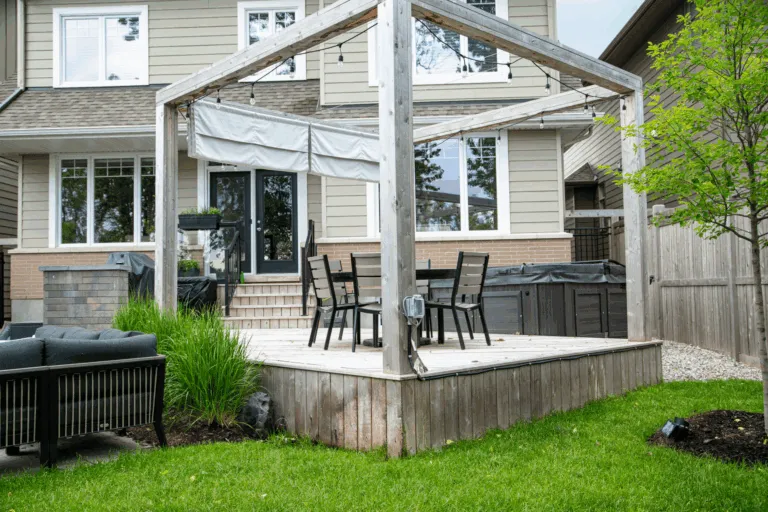
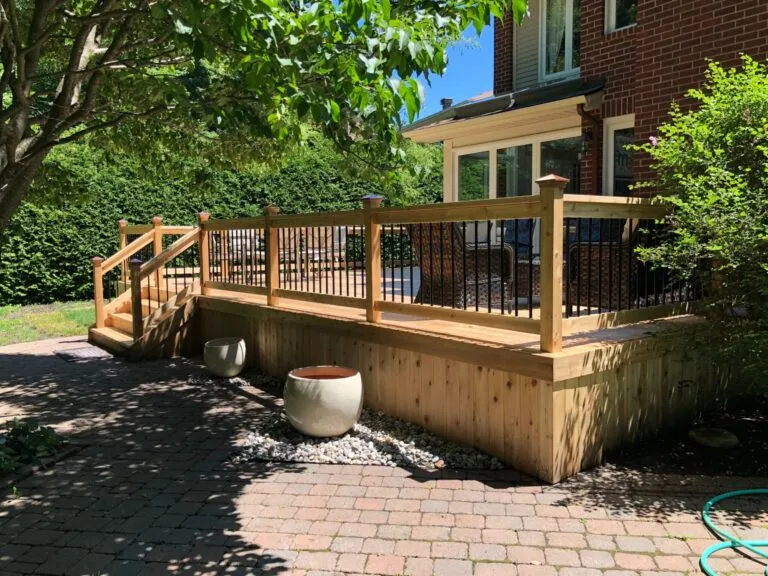
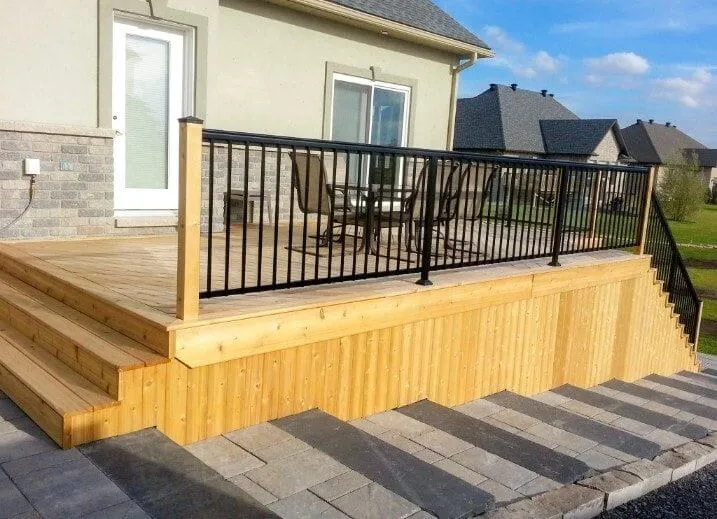
A wood deck is made from—you guessed it—natural wood. Wooden decks first gained popularity among homeowners over 50 years ago and remain a tried-and-true decking option. Thanks to their timeless appearance and natural character, they remain a popular choice for homeowners who love the look of unique imperfections and enjoy a hands-on approach to upkeep.
While there are many different wood decking materials to choose from, the most common types include:
- Pressure-treated lumber
- Cedar
- Ipe
- Redwood
What is a Composite Deck?
Composite decking was developed in the 1990s as a lower-maintenance alternative to traditional wooden decks. Modern composite materials are manufactured by mixing recycled wood fibres and plastic, and bonding them together to create durable deck boards that mimic real wood. As a result of their durability and undemanding nature, composite decks have become the preferred choice for homeowners seeking a ‘build it and enjoy it’ solution.
Differences Between Wood & Composite Decking
| Factor | Wood | Composite |
| Upfront Cost | Lower | Higher |
| Maintenance | Higher | Lower |
| Lifespan | Moderate | Longer |
| Appearance | Unique Grain | Consistent Look |
Upfront Cost
- While the price tag may not be the most exciting part, it’s often among the most important considerations. Wood has a less intensive manufacturing process, leading to a lower initial cost, but it lacks many of the built-in safeguards against water damage, warping, or rotting.
- Composite materials are specifically designed to withstand outdoor living, with many modern products featuring a protective outer shell to further shield against the elements.
Maintenance
- The work doesn’t necessarily stop once the last board is laid. While all decks will require some maintenance, the level depends heavily on the type of deck. Wood decking will require consistent, ongoing maintenance, including staining, sealing, and painting when needed. Ottawa’s freeze-thaw cycles are hard on wood that hasn’t been kept sealed, which matters when winter can last for over 6 months.
- On the other hand, composite decks are widely favoured as a low-maintenance alternative that won’t require any of these more intensive tasks.
Lifespan
- While a deck may look great when it’s first built, how it holds up after years is often the true test. Wood offers a respectable lifespan when regularly cared for, often anywhere from 10 to 15 years. In contrast, composite decking tends to last longer with less work, often lasting 25 to 30+ years.
Appearance
- First impressions matter, especially when it comes to hardscaping in Ottawa. Wood offers a unique grain that no two boards share, leading to a one-of-a-kind appearance as sun exposure develops a natural patina.
- Composite delivers a consistent finish for its entire lifespan, with generally uniform colour and pattern across every board.
So, Which Is Better For Me?
When it comes to decking, there’s no universally right answer. The right deck depends on the house, the yard, and how much time you want to spend maintaining it.
For Ottawa homeowners looking for a specific, stunning appearance and who don’t mind putting in the work, wood may be a good choice. On the other hand, for those in the market for a low-maintenance and long-lasting deck, composite is usually the smarter choice.
Ready to Get Decked Out?
If you’re interested in building a stunning deck that will make the whole neighbourhood jealous, you’re in the right place. From decks to pergolas and other hardscaping in Ottawa, we’d love to chat.
Request a free quote from NeighborScape today, and get one step closer to a backyard that’s built to last.